
Tea Is Officially “Healthy”
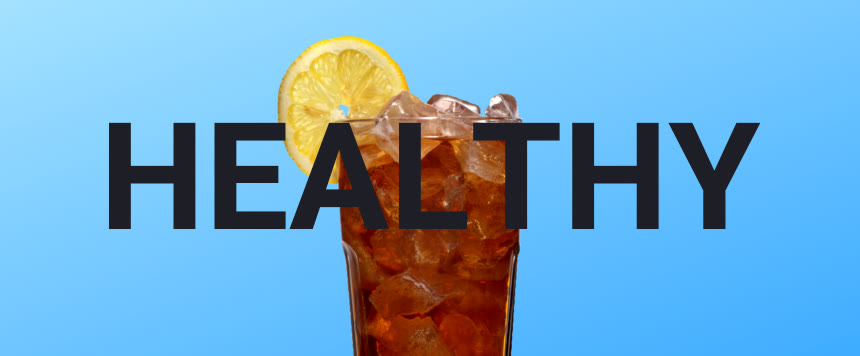
The U.S. Food and Drug Administration (FDA) recently issued updated guidance on the use of the term: “healthy” to help consumers identify foods that align with dietary recommendations. Tea manufacturers can now use the “healthy” claim if the tea meets the updated criteria.
HEALTHY DIETARY GUIDELINES AND TEA
The “healthy” claim provides a quick signal on labels to help consumers recognize foods that support healthy dietary choices. The claim could be especially useful for those who may be less familiar with nutritional information.
For more information on the use of the “healthy” claim for teas, please visit the FDA website:
 The new dietary guidelines (pgs 35-36) specifically point out the value of unsweetened teas as calorie-free, and recommended as “primary beverages.”
FUTURE GUIDELINES: AFFORDABLE, ACCESSIBLE, FLAVAN-3-OLS
Additionally, the tea industry has plenty to say about the health benefits of tea. This letter from the Tea Association of the U.S.A. highlights studies and useful information about the relationship between tea consumption, flavan-3-ols, and health outcomes. Tea consumption has been positively associated with:
- cardiovascular health
- diabetes prevention/management
- cholesterol levels
- blood pressure levels
- weight management
Aside from the main intent of the letter, the content is handy as a cheat-sheet of sorts. The extensive list of studies and research related to tea is summarized and useful whenever questions about tea’s health benefits may arise.
Equally important- the messaging is a reminder that not only is tea healthy, but comes in formats that are widely affordable and accessible to consumers across the country. The barriers to adding tea to a healthy lifestyle are extremely low.
Earlier in 2025, U.S. tea businesses had the opportunity to provide supporting comments to the FDA to further highlight the value of tea in a healthy diet. The Tea Association of the U.S.A. invites organizations within the tea industry to submit their own letter to the Office of Disease Prevention and Health Promotion to give tea improved recognition in future FDA Dietary Guidelines.
Recent research and dietary guidance have been placing greater importance on bioactives. “Bioactives” is the term being used to describe non-essential compounds, like vitamins, but compounds that are considered health-promoting beyond basic nutrition needs. Among these bioactives, flavan-3-ols have come to the fore as very promising in promoting cardiometabolic health. The studies pointed towards improvements in blood pressure, cholesterol, and blood sugar management. Work in this area enhances our conversations on health by extending our focus from what should be removed from our diets towards what should be added. In the studies, tea has shown itself to be an affordable and simple way to make sure everyone can take advantage of the benefits of flavan-3-ols. Further information on dietary guidelines regarding flavan-3-ols can be found here:
https://nutrition.org/are-you-getting-enough-flavan-3-ols/
https://advances.nutrition.org/article/S2161-8313(23)00063-7/fulltext